2025 · Mobile, backend and infrastructure
Loxim
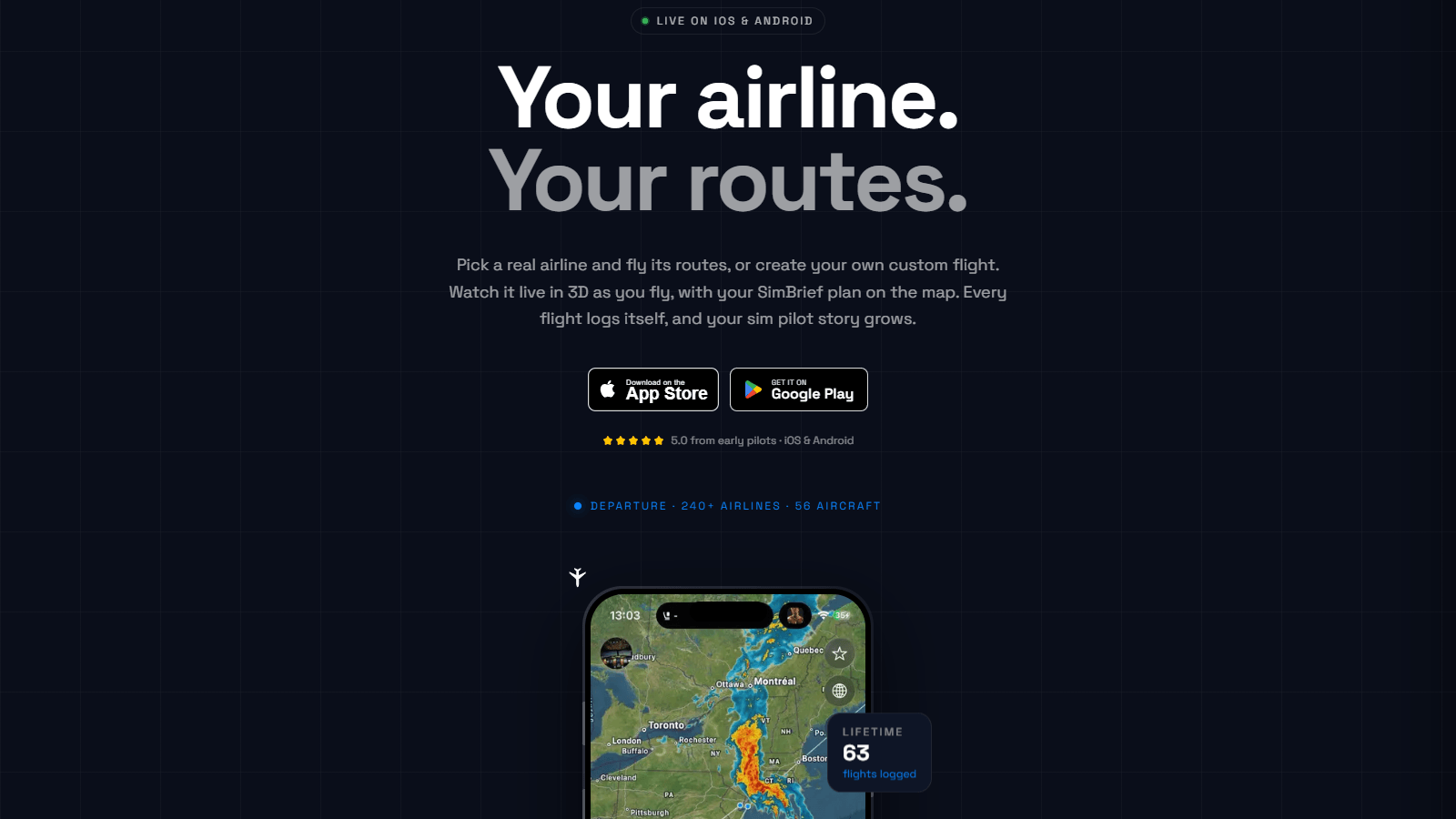
Flight simulator pilots want to fly the way the real thing works: a real airline, a real route, a real aircraft, and a logbook that fills itself in. Loxim closes the loop between the simulator on the desk and the phone in the hand.
- 30,000+
- pilots worldwide
- 240+
- real airline rosters
- 56
- aircraft types
- 4
- simulators supported
The problem
Serious flight simulation is a hobby with real standards. People want to fly the schedule an airline actually flies, in the aircraft it actually uses, and keep a record of it. Until now that meant scattered spreadsheets, forum threads and PDF timetables, with nothing connecting any of it to the simulator itself.
Nothing wrote the flight down afterwards either. You landed, and that was the end of it.
What it does
- MyRoster: pick an airline from 240+ real rosters and get the schedule it genuinely flies, across 56 aircraft types.
- Loxim Bridge, a free Windows companion, streams telemetry out of MSFS 2020, MSFS 2024, X-Plane 11 and X-Plane 12.
- Live 3D tracking while the flight is in the air, watchable from the phone.
- One tap pulls a SimBrief briefing into the app instead of alt-tabbing to a browser.
- The logbook fills itself in, and the landing is graded automatically the moment the wheels touch.
- A cinematic 3D replay of the finished flight, and a passport-style globe of everywhere you have flown.
How it is built
- One React Native codebase shipping to both the App Store and Google Play.
- A NestJS API owning rosters, flights, the logbook and the subscription tier.
- Postgres for everything durable; Redis in front of the reads that repeat on every single flight, because roster and live-flight lookups are the hot path and they are the same for everyone.
- The desktop bridge is a separate binary on purpose: the simulator runs on Windows and the pilot is looking at a phone, so the two have to be decoupled and reconcile through the API.
- An admin panel behind it for airlines, aircraft, rosters, users and subscriptions, so adding a fleet is data entry rather than a deploy.
Infrastructure
- Containerised with Docker on a dedicated VPS, provisioned and maintained solo.
- Thirty thousand users on a hobby-hours project means the boring parts have to hold on their own: this runs without anyone watching it.
Stack
- React Native
- NestJS
- Postgres
- Redis
- Docker
- SimBrief API
- MSFS & X-Plane SDKs
Other projects
Ya'Noo
A food delivery platform built for how Cameroon actually pays: Mobile Money, and a price you see before you tap order.
Yoma
Property rental for Cameroon, rebuilt around short vertical video, on an event driven backend of five services.
Zenithe Insurance
An insurance app where a client reads the policies, subscribes and follows the contract from their phone, built and run to ISO 27001 and ISO 9001 practice.